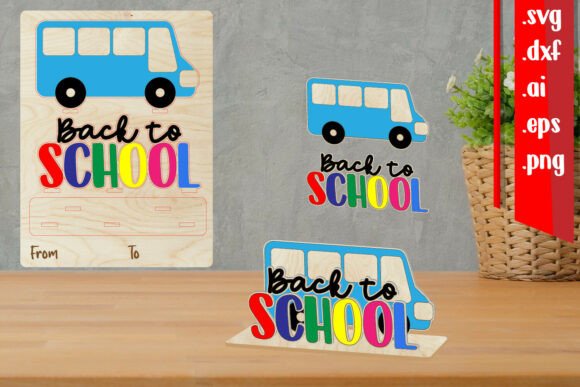
Back to School Wooden Card, School Laser: Integrating Digital Files into Your Creative Workflow
The transition from digital planning to physical creation is often the most critical phase in any craft project. For professionals and hobbyists alike, the gap between a concept on a screen and a tangible object requires precision tools and reliable assets. This is where Back to School Wooden Card, School Laser files become an essential component of your production pipeline. These are not merely decorative images; they are structured digital instructions designed for laser cutting machines that bridge the gap between design software and physical materials.
Understanding how to utilize these specific files ensures that your workflow remains efficient, consistent, and high-quality. Whether you are running a small business producing seasonal merchandise or an educator looking to create engaging classroom materials, the integration of vector-based cut files into your process demands attention to detail regarding file formats, material compatibility, and machine settings.
Defining the Asset Within the Production Chain
A Back to School Wooden Card, School Laser file represents a precise set of geometric paths intended for automated fabrication. Unlike raster images used for printing, which rely on pixel density, these files utilize mathematical coordinates to define cuts and engravings. When you acquire this asset, you are purchasing a blueprint that allows a laser cutter to execute complex designs with minimal human intervention.
The value of this asset lies in its versatility across different stages of a project lifecycle. Before you even begin the cutting process, the file serves as a planning tool. You can visualize the final product dimensions, test fit variations within your design software, and calculate material usage before committing to physical resources. This pre-production analysis is crucial for reducing waste and maintaining tight margins in commercial applications.
Once the design phase is complete, the file transitions into the execution stage. The laser cutter reads the vector data to determine where to burn, engrave, or slice through the material. This automation allows creators to focus on assembly, finishing, and quality control rather than manual tracing or intricate hand-cutting. The result is a level of consistency that is difficult to achieve through traditional crafting methods.
Navigating File Formats for Seamless Integration
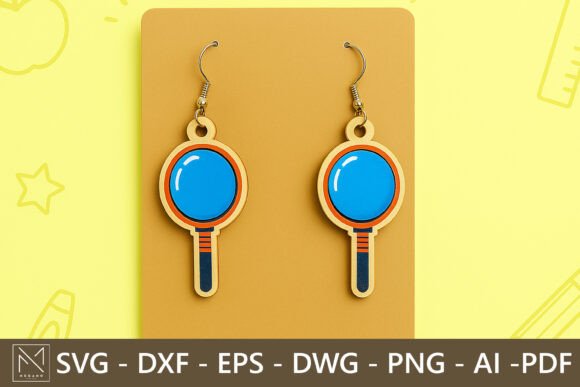
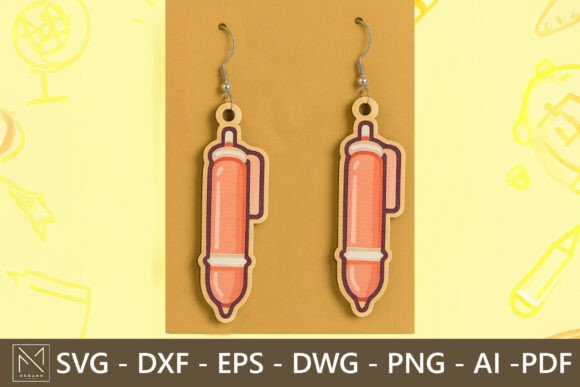
The delivery of your purchase as a zip file containing SVG, DXF, PNG, EPS, and AI formats is a strategic feature that enhances compatibility across various software ecosystems. Each format serves a specific purpose within the broader workflow, and understanding when to use which file type is vital for professional results.
- SVG (Scalable Vector Graphics): This is the industry standard for web-to-physical workflows. It is lightweight, scalable without loss of quality, and widely supported by modern laser cutting software like LightBurn and Glowforge. If you are working on a Mac or using browser-based design tools, the SVG is often your primary starting point.
- DXF (Drawing Exchange Format): Essential for users operating within AutoCAD or older versions of laser control software. The DXF format ensures that your geometry translates accurately into industrial-grade environments, making it ideal for large-scale production runs where precision is non-negotiable.
- EPS and AI (Encapsulated PostScript and Adobe Illustrator): These native Adobe formats provide the highest level of editability. If you need to modify the text on a card, adjust spacing, or recolor elements before sending them to the cutter, opening the file in Illustrator offers granular control over every node and anchor point.
- PNG (Portable Network Graphics): While primarily a raster format, the inclusion of PNG files in your download allows for quick visual previews or for use in engraving modes that interpret grayscale values. This is useful for creating textured backgrounds or shading effects on wood surfaces.
By providing this comprehensive suite of formats, the Back to School Wooden Card, School Laser package ensures that you are never locked out of your preferred workflow. You can import the file into your current design stack immediately, regardless of whether you are a freelance designer using Adobe CC or a shop owner relying on open-source alternatives.
Material Selection and Machine Compatibility
The success of your project relies heavily on the interaction between the digital file and the physical medium. The recommendation for 3mm material is not arbitrary; it reflects the optimal thickness for structural integrity while ensuring the laser can penetrate the entire depth without excessive power settings that might char the edges.
When integrating this file into your routine, consider the properties of your chosen wood. Plywood, MDF, and basswood are common choices, but each reacts differently to laser energy. A 3mm sheet of Baltic birch plywood will produce cleaner edges than a lower-grade composite board. Furthermore, the grain direction of natural wood can affect the appearance of engraved areas. In a professional setting, aligning the grain perpendicular to the cut lines can reduce the risk of warping during the heating process.
Compatibility extends beyond just the wood. Ensure your laser cutter's bed size accommodates the dimensions of the recommended card size. While the digital file is scalable, the physical constraints of your machine dictate the maximum output. If you plan to produce these cards in bulk, you may need to arrange multiple copies on the material sheet to maximize yield. Most laser software includes nesting features that allow you to automatically pack the Back to School Wooden Card, School Laser designs onto a single 3mm sheet, significantly improving efficiency and reducing material costs.
Workflow Optimization and Quality Control
Implementing these files into your daily operations requires a shift in mindset from manual crafting to process management. The goal is to establish a repeatable system that yields consistent results with minimal supervision. Start by creating a standardized setup profile in your laser software. Save the power, speed, and frequency settings specifically for 3mm wood. This eliminates the need to recalibrate for every new batch, saving valuable time during production runs.
Quality control should be integrated at multiple checkpoints. First, verify the file integrity by checking for stray points or overlapping paths in your design software. These errors can cause the laser to dwell in one spot too long, resulting in burns or fire hazards. Second, perform a test cut on a scrap piece of the same 3mm material. This step confirms that the focal length is correct and that the power settings are appropriate for the specific batch of wood you are using. Variations in wood density can occur even within the same brand, so testing is a necessary precaution.
For entrepreneurs and small business owners, the ability to quickly pivot between projects is a competitive advantage. Because the file is delivered as an instant digital download, you can respond to market trends or last-minute orders without waiting for shipping. If a school district requests a custom order for next week, you have immediate access to the source files. You can modify the text, swap out graphics, or adjust quantities within minutes. This agility is impossible with pre-manufactured goods or items requiring long lead times.
Strategic Applications Across Sectors
The utility of the Back to School Wooden Card, School Laser asset extends far beyond simple decoration. Its application spans various sectors, each leveraging the file for different outcomes.
In the educational sector, teachers can use these cards to create interactive learning aids. Imagine a classroom where students receive personalized wooden nameplates or achievement badges made from the same design family. The tactile nature of wood engages learners in ways that paper cannot, fostering a deeper connection to their environment. Educators can integrate these items into lesson plans about engineering, design, or art history, using the laser cutting process as a demonstration of technology in action.
For marketers and content creators, these cards serve as high-value incentives or branded merchandise. A well-crafted wooden card with a laser-engraved logo feels premium and durable. Unlike plastic or paper giveaways that end up in the trash, wooden items are often kept as keepsakes. This longevity increases the lifespan of your brand message. By incorporating the Back to School Wooden Card, School Laser design into a promotional campaign, you create a tangible touchpoint that resonates with parents and students alike.
Freelancers and independent makers can leverage these files to diversify their product offerings. Instead of competing solely on price, they can compete on customization and quality. Offering a service where clients can choose their own colors, add names, or select specific finishes transforms a generic template into a bespoke product. The flexibility of the provided file formats makes this customization seamless, allowing you to offer unique value propositions without needing advanced manufacturing capabilities.
Long-Term Planning and Resource Management
Sustainability and resource management are becoming increasingly important factors in creative workflows. Using digital files for laser cutting allows for precise material utilization, minimizing offcuts and waste. When you nest the Back to School Wooden Card, School Laser designs efficiently on a 3mm sheet, you ensure that almost every square inch of wood is utilized. This efficiency not only reduces costs but also aligns with eco-friendly practices that many consumers now expect.
Furthermore, keeping a library of these digital assets creates a long-term resource for your business or personal projects. Unlike physical inventory that degrades over time or takes up storage space, digital files remain pristine indefinitely. You can archive the zip file, retrieve it years later, and reproduce the exact same card with the same fidelity. This permanence supports long-term planning, allowing you to maintain a consistent brand identity or educational curriculum over multiple years.
Ultimately, the integration of Back to School Wooden Card, School Laser into your workflow is about empowering creativity through technology. It removes the barriers of technical limitation, allowing you to focus on the vision and the outcome. Whether you are producing a single item for a gift or a thousand units for a store launch, the combination of precise digital files and reliable hardware provides the foundation for success. By mastering the preparation, compatibility, and execution phases, you transform a simple download into a powerful tool for growth and expression.